Showing posts with label oil paint. Show all posts

Wednesday, July 13, 2022

Cold Wax!


Cold Wax is a soft buttery paste that consists of beeswax, solvent, and resin. It is used in painting, specifically oil painting, to help with many techniques. Cold wax can also be used with other mediums beside oil, such as alkyd oil colours, alkyd based painting mediums, and Gamsol. It also mixes well with other mediums such as dry pigment, powdered charcoal, marble dust, chalk pastel, graphite and oils sticks. Cold Wax is not physically cold or requires cold temperatures, the name refers to the fact that it requires no heat.


Cold Wax was created in the 1930’s by Arthur Dove, an American artist. He did so by melting beeswax in turpentine and linseed oil. However it is derived from encaustic painting which has been around since the 4th century B.C, created by the Ancient Greeks. Pausias, a Greek painter of the 4th century B.C is said to have been one of the first recorded artists to use the encaustic painting methods.


Pausias encaustic painting


Cold Wax is very similar to encaustic painting. Encaustic painting is also a wax medium that creates similar effects to that of cold wax. Encaustic painting builds up relief and gives the painting a rich optical effect creating a startlingly life-like illusion. This environmentally safe medium emits no toxic fumes and uses no solvents. The biggest difference between cold wax and encaustic painting is that encaustic painting must have the wax be molten to work with and then reheated once it is applied to the surface. Whereas with cold wax, no heating is required. 


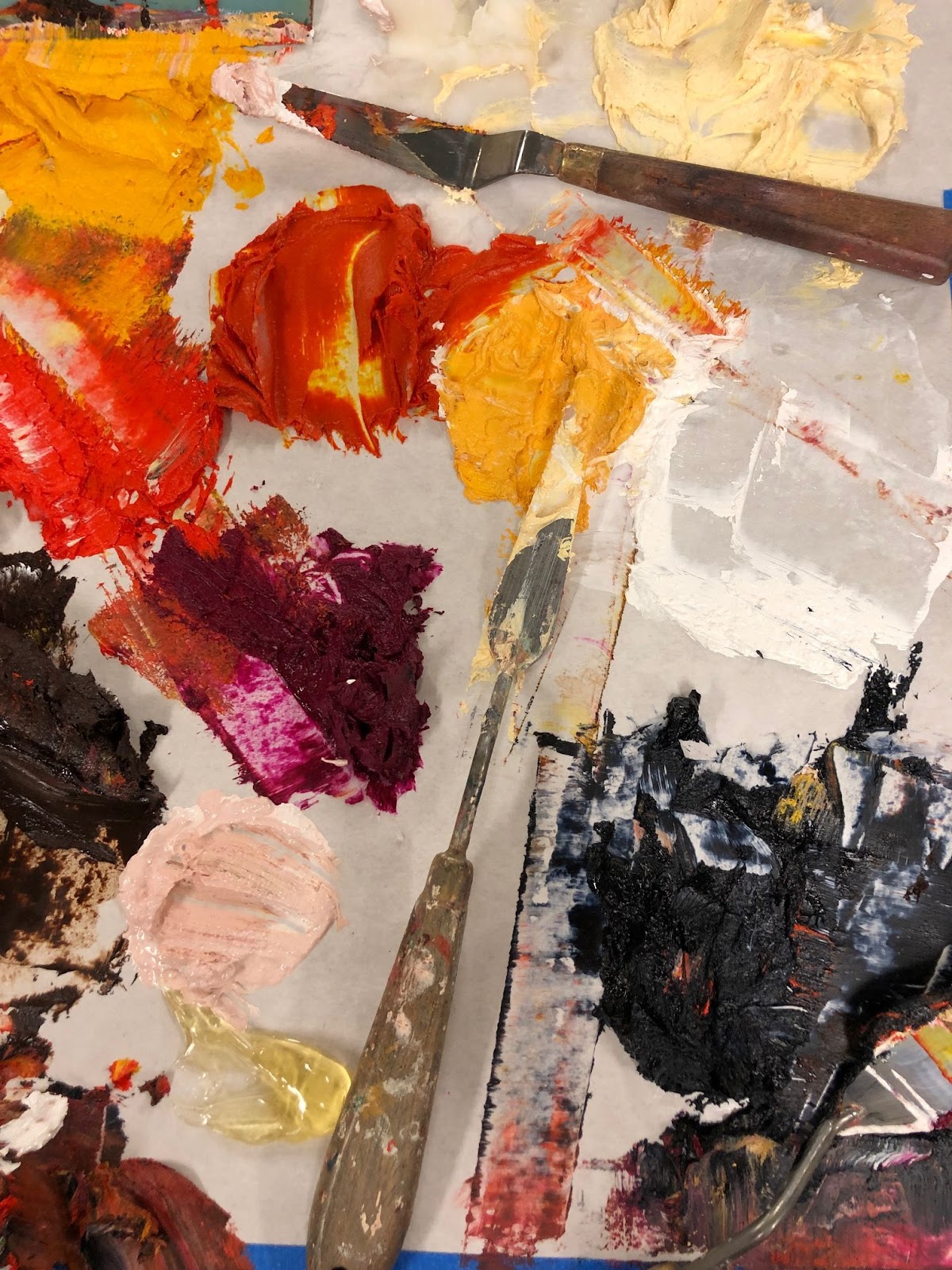
Cold Wax paste has a very easy application process. All you have to do is mix the paste with the oil paint on your mixing palette. When mixing, you will need a ratio of 20% wax to 50% oil paint. The wax and oil paint mixture can be applied with an assortment of materials such as paint brushes, palette knives, colour pushers, squeegee, or rollers. It is best to apply the mixture to rather paper, canvas, or panel as it needs to be applied to an absorbent surface. Once applied, the wax then evaporates and hardens to the density of a beeswax candle. You can also remove cold wax with Gamsol. Cold Wax can also be used as a varnish, and does not just have to be used when mixed with paints. Instead wait for your painting to dry, and then rub a thin coat of the cold wax medium on top. This is a popular desired effect for acrylic paintings. 


Cold Wax can add a number of things to your oil paintings! It helps speed up drying times and it increases the paint's workability. It also adds body, transparency, and depth to your artworks. Cold wax makes the oil colours thicker and dry with a more matte finish. When being used, cold wax and oil paint create a glazing effect with transparent layers being built up.


After using cold wax, it will take about 24 hours to dry to a matte finish. However, if you would prefer a satin sheen finish, use a soft cotton cloth to buff out the cold wax after 4-6 hours. It’s good to note that once the cold wax-oil paint mixture has dried, you can still continue to paint on top of it. Cold Wax paintings are best in cooler temperatures as they do have a melting point of 155 degrees F, therefore be careful where you store it.


Pros

  • Speeds up drying time

    • As quick as within 24 hours!

  • Requires no special ventilation

    • Unlike encaustic painting

  • Makes oil paints thicker and matte

    • Perfect for layering!

  • Adds body, transparency, and depth


Cons

  • Cannot mix with acrylic paint

    • But can be used as a varnish on top of an acrylic painting!

  • Has a melting point of 155 F

    • Needs to be kept in a cooler environment!


Cold Wax is a wonderful medium to test out on your oil paintings! It’s a simple, beginner friendly medium that only requires a small amount to be mixed into your paints. The results create beautiful matte finishes that enhance the body, transparency, and depth of your artworks. The fast drying times the wax creates are a huge bonus to your painting process as well! Using cold wax is definitely a technique to try out on your paintings.


Monday, November 29, 2021

Convexo Artist Canvas!

    Every artist has a different preference when it comes to the materials they work with. For painters; some like to make their own canvas, some like to purchase premade canvas, and some like to use surfaces that have no relation to canvas. There are endless materials to paint upon however for those who don’t want to stray too far from the traditional yet try something a little different, we have the product for you. Our Convexo Artist Canvas is the perfect blend of the traditional stretched canvas but with a little bit of spice

Mediums that can be used:

  • Acrylic

  • Oil

  • Paint Markers

  • Spray Paint

  • Permanent Markers

  • Water Soluble Oils

  • Alkyds


These convexo canvases are made from 100% cotton with an acrylic titanium priming. The uniform texture of the canvas makes for a smooth and receptive surface for paints such as oil and acrylic, as well as mixed media. The canvas is stretched onto a wood stretcher frame and features a 1 ½ inch beveled edge to create a clean frameless appearance. These three dimensional convexo canvases come in two distinct shapes; round and rectangular. 

The rectangular canvas is perfect for a traditional styled painting whereas a round canvas is perfect for a more unique composition! The beveled edge of the canvas creates a more 3D like effect to the surface as well as can create more visibility for the painting itself.

The rectangular convexo canvases come in three sizes: 

  • 18” x 24” 

  • 24” x 36” 

  • 30” x 40”


Whereas the round convexo canvases come in eight different sizes: 

  • 8” 

  • 12” 

  • 16”

  • 20”

  • 24” 

  • 30” 

  • 36” 

  • 40”


The Convexo Artist Canvas by Fredrix is a wonderful choice for fine art painting and crafts! With a double primed canvas and an acid free acrylic titanium gesso, this material is the best surface for your creations. Featuring a beveled edge on the round and rectangular shapes, these canvases hang without a frame giving a clean and classic appearance. This versatile canvas can be used for acrylics, oils, paint markers, spray paints, permanent markers, water soluble oils, and alkyds. With its wide range of  sizing options, any artist will be able to find the perfect project to use these canvases for!


For more items like this visit: Vancouver On Canvas- Printing Services, Framing Services, and Art Supplies

To find Convexo Canvas: Vancouver- Convexo Canvas


Monday, November 22, 2021

Painting for Youths!

    When it comes to painting, it can seem overwhelming with all of its diversity. From different mediums, to different styles, as well as endless materials to even paint on! With the help of this article, painting will be broken down for you to understand. Including the different types of paints and what they do as well as helpful tips and tricks for beginners! Doing a small art project a week is the perfect way to spark the creative side as well as gain practice and build confidence. 


One of the most important steps when it comes to painting is knowing how to break down and understand a painting, even before you begin creating one. The easiest way to break down any art medium is by understanding its Form, Content, and Context. The Form of an artwork is strictly what you see, including its lighting and shadows, contrast, colours, linework, medium, and size to name a few. The Content of an artwork is the story you see within the art, whether it be a scene of a garden at sunset or a child playing by the river. The Context is the back story; when it was made, how it affected its audience, and how its meaning has grown over time. In simpler terms, Form is for the artist, Content is for the story tellers, and Context is for the history buffs. For example, looking at The Invasion (1892) by William-Adolphe Bouguereau, it is an oil painting composed mainly of cool colours such as greens and blues with stark contrasts and lighting focused upon the central figures. The image seen appears to be a half nude woman in a blue cloth surrounded by cherubs or cupids in the forest. It was made in 1892 as a private aesthetic painting, strictly to visually appeal with no deeper meaning in its point in history. Also, it holds themes of classic Greek mythology as well as the idealization of the female form.


The two main mediums of painting are oil and acrylic, with one being traditional and the other being more modernized. With acrylic paints being invented roughly in the 1950s and oil paints being used as early as the 7th century. Acrylic paint comes with many perks such as fast drying, even coating, base coat deemed unnecessary, adheres to any surface, and water soluble. Oil paints on the other hand have a flexible depth of colour as well as can be applied in thin and thick glazes. The biggest difference between the two is the drying times, with acrylic drying in roughly half an hour and oil drying in roughly 24 hours. This is neither good nor bad, just dependent on the painter themselves and their preferences. 


Another popular painting medium is watercolour which is an easily blend-able transparent pigment that can be reactivated with water. A similar medium to this is gouache, with the primary difference being that gouache is more opaque than watercolour. These paints are perfect for creating dreamy pastel artworks and are easy to use as they can be reactivated with water, making the paint itself last a long time. However, these water paints can only be applied to certain papers and the paint can crack if too many layers are applied. 


Tips and Tricks for beginner painters:

  • Use water based paints to start (i.e. acrylic, watercolour, gouache) as they do not require any toxic solvents

  • Use masking tape to create a boarder or block out any areas you don't want painted

  • Always create a light sketch as to not smudge the pencil

  • Starting off with a base wash ( a light watery base of paint that goes under the painting ) on the canvas can make painting less intimidating

  • Less is more! Always use less paint to start to avoid waste, as you can always get more

  • If possible, prop the canvas up so its facing you, that way you will get a   proper perspective 

  • Mixing white into the different colours creates more opaque paints

  • Use dark shades of blue or purple for shadows as black can be too harsh


There are many benefits towards youth educational development through the arts. Through practicing art, young people will develop their learning in ways of thought, knowledge, expression, and feeling through the basis of creativity. As well, art can help build confidence within a young person. The skills learned through making art can result in an out of box thinking style and help with taking criticism and guidance from others. Art has many ties within other subjects such as math's, science, and history and can lead to a better understanding of all subjects when taught to think creatively. More benefits of art education can include a deepened understanding of culture as well as self, and improved cognition in the forms of verbal and visual memory, motor skills, and language communication. Overall, learning varying forms of art can lead to many personal growth benefits in young people as art has more power than just creativity.


Painting can seem intimidating and tricky when you're a beginner however with practice and time you will see results! Understanding the difference between types of paint such as oil, acrylic, watercolour, and gouache is the first step in painting. With the help of the tips and tricks listed above, as well as the breakdown of Form, Content, and Context, you will have everything you need to know to get started. And with all the education benefits that come along with the practice of art, there is no reason to not want to become a painter! Like any art form, practice makes perfect!


        Next week we will discuss a more modern take on art for young people, specifically artwork created using digital media! Stay tuned to find out more and see how traditional arts go hand in hand with modern arts, as well as tips and tricks on how to get started for beginners!

For more information on local artists supported by KeenArt Media: VancouverOnCanvas: Local Artist Guide